Desulphurization

Hydrogen sulphide (H2S) is present in various gas streams such as biogas, sewage gas and landfill gas. Both its corrosive properties and its harmful environmental impact make it necessary to remove it from these gas streams. TS Umweltanlagenbau relies on biological desulphurization for this: bacteria oxidise the pollutants and thus render them harmless.

The biological process developed by TS is particularly well suited for hydrogen sulphide removal because it is:

  • Effective
  • Selective for H2S
  • Low in operating costs
  • Low in maintenance effort
  • Fully automated
  • Individually designed for each specific application
  • Converting H2S into environmentally safe oxidation products (fertiliser)

Our desulphurization plants meet the quality requirements of VDI guideline 3478.

Material

  • Polypropylene (PP) for vessels, gas pipes and technical containers
  • Polyvinyl chloride (PVC) for the circulating liquid
  • Galvanised steel / stainless steel for water-carrying pipework, pipe supports and cable trays

Application

Applications include:

  • Municipal and industrial sewage treatment plants
  • Chemical industry
  • Paper industry
  • Landfills
  • Food industry
  • Agriculture
  • Biogas plants

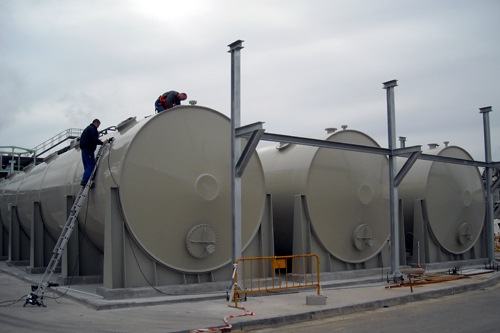
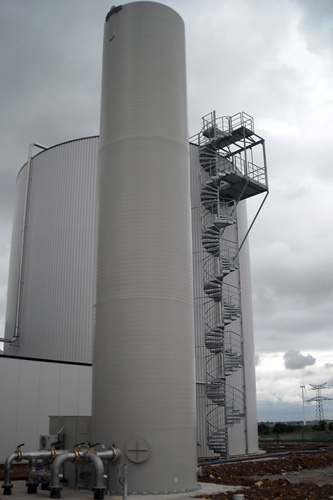
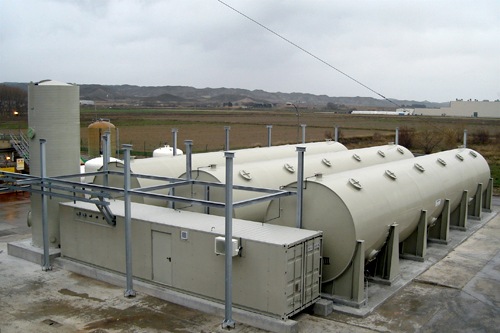
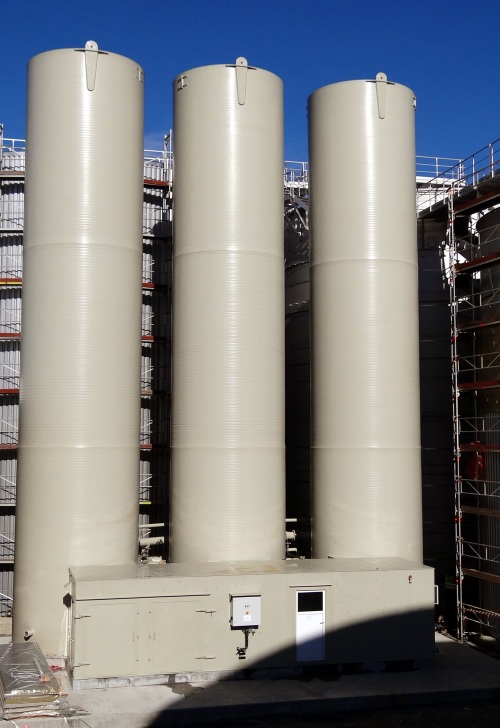
Trickle-bed reactors

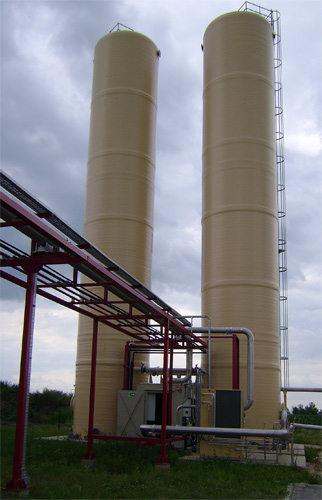
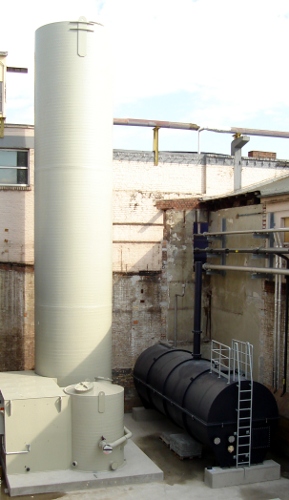
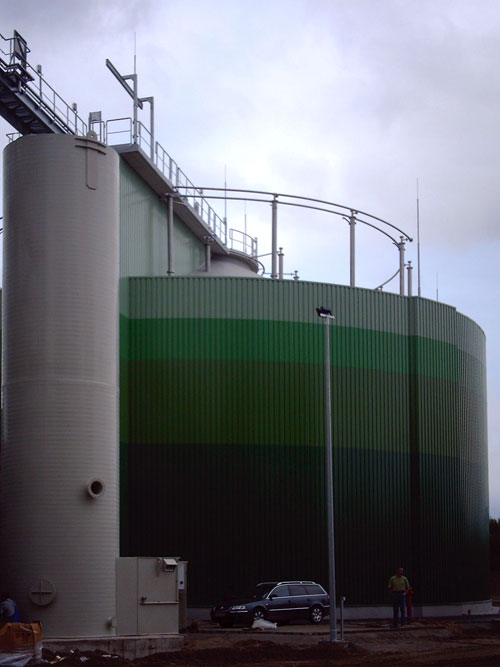
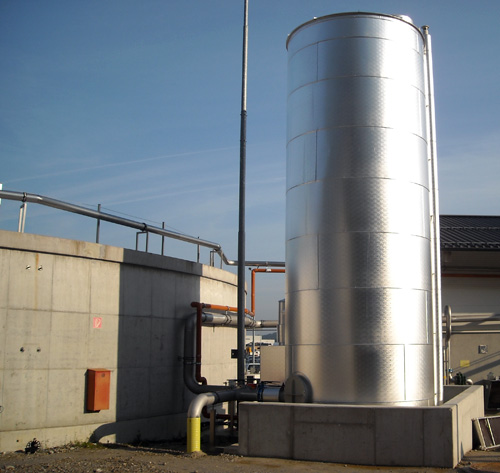
For biological biogas desulphurization, TS uses trickle-bed reactors (biotrickling filters). In them, the absorption stage and the biological stage are combined in a single unit. Targeted process management and optimised heat and nutrient supply (fertiliser) give them a high specific purification performance.

The reactor is filled with plastic packing elements. Their open structure provides a large surface area in a small volume and lets the gas flow evenly through the bed with a low pressure drop.

From above, the circulating liquid trickles over the packing. A biofilm forms on its surface – a thin, living layer of sulphur-oxidising bacteria. The hydrogen sulphide passes from the gas into the liquid film, where the bacteria oxidise it – to elemental sulphur or to sulphate, depending on the oxygen supply.

The circulating liquid keeps the biofilm moist, supplies the bacteria with nutrients and carries away the oxidation products. Part of it is continuously discharged and replaced with fresh water; the discharged, sulphate-containing liquid can be used as fertiliser.

Process steps
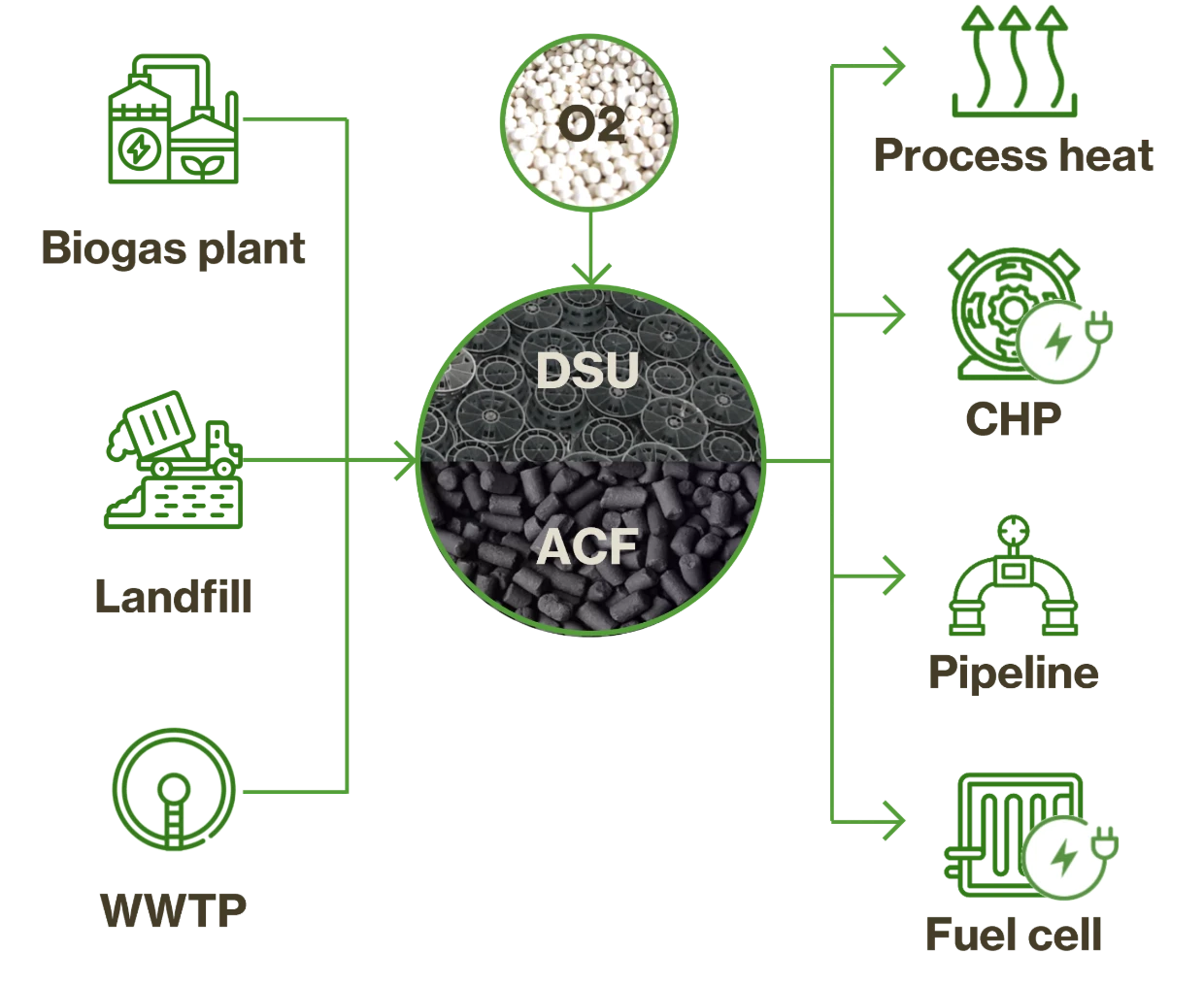
Process diagram: raw gas from a biogas plant, landfill or wastewater treatment plant passes through the desulphurization plant with oxygen supply and the activated carbon filter. The clean gas is used for process heat, in a CHP unit, fed into the pipeline or used in a fuel cell.
From raw gas to use. DSU: desulphurization unit (trickle-bed reactor), ACF: activated carbon filter, O2: oxygen supply

Depending on the requirements for the use of the clean gas, the bacteria are supplied either with ambient air or with concentrated oxygen – for example from an O2 generation plant.

The trickle-bed reactor handles the coarse purification, removing the bulk of the hydrogen sulphide. Where higher requirements apply to the clean gas, a drying stage and an activated carbon filter can be added downstream for fine purification.

If the raw gas contains ammonia (NH3), an acid scrubber may need to be installed upstream of the biological purification.

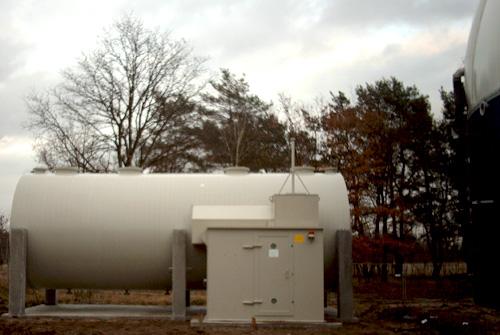
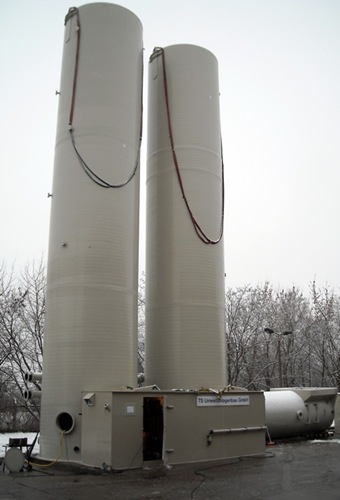
Photo gallery
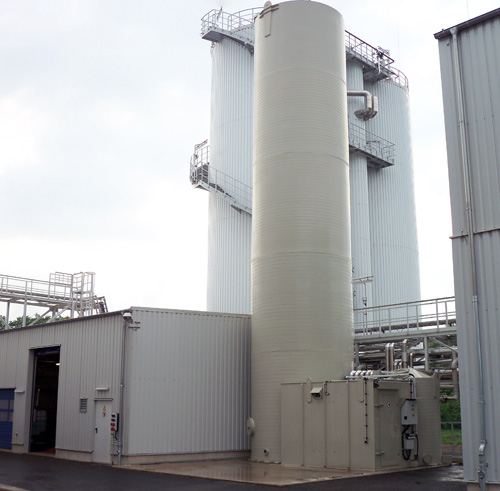
Biological Desulphurization
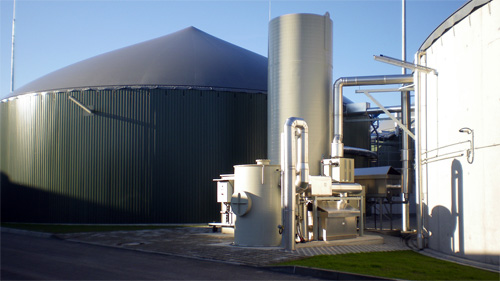
Biological desulphurization with downstream chemical scrubber for an industrial sewage treatment plant (320 m3/h at max. 16,000 ppm H2S)
combined Biological Desulphurization
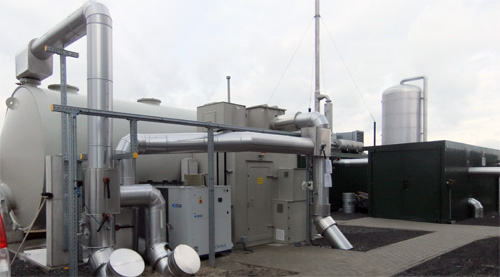
Biological desulphurization for biogas combined with cooling, compression, and reheating, followed by fine cleaning with an activated carbon filter
Desulphurization plant
Desulphurization plant for 1,100 m3/h biogas at 9,000 ppm with downstream chemical scrubber for fine cleaning.
oxygen Desulphurization plant
Desulphurization plant with technically pure oxygen (oxygen generated directly from the ambient air at the desulphurization unit)
Desulphurization for paper industry
Desulphurization plant for paper industry
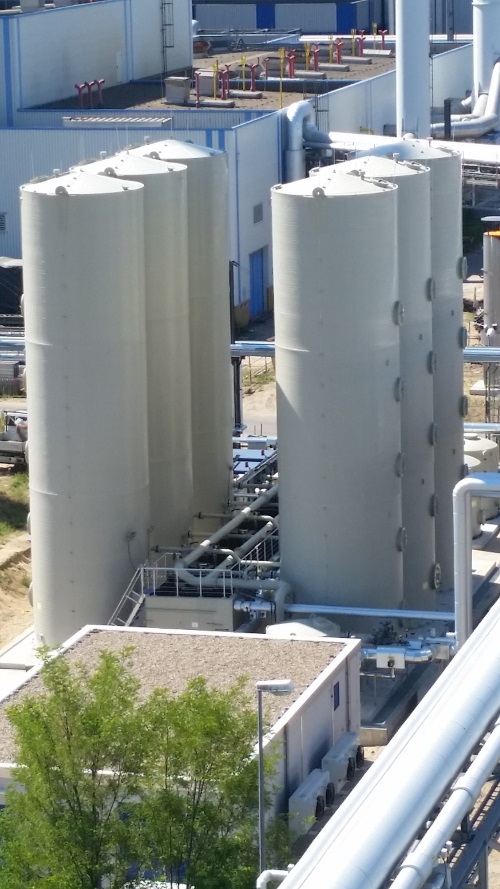
Assembly and installation of a combined biological/chemical desulphurization plant for the paper industry. Maximum H2S load: 75 kg/h
Desulphurization in france
Desulphurization plant, France
Desulphurization plant for paper industry
Assembly and installation of a combined biological/chemical desulphurization plant for the paper industry. Maximum H2S load: 75 kg/h
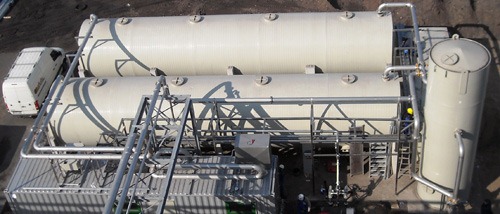
Biological desulphurization plant for a paper factory top view
Desulphurization plant in Norway
Desulphurization plant in Norway. H2S-Reduction up to 30 kgH2S/h
Biological desulphurization for a paper factory in serbia.
Biological desulphurization for a paper factory in Serbia.
Biological desulphurization plant at work.
Desulphurization plant in Hungary for 1300 m³/h.
Desulphurization plant in Hungary for 1300m3/h.
Desulphurization plant for a meat factory
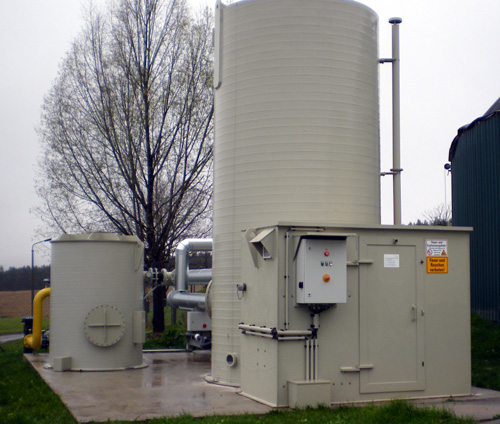
Desulphurization plant type: TS for biogas without direct air injection
Desulphurization plant – type: TS for biogas without direct air injection at a biogas plant with feed-in of the purified gas into the grid
two-way desulphurization plant
In-house function test before delivery of a “dual-line desulphurization plant” for cleaning of sewage gas from a paper factory
biological desulphurization for paper industry
Biological desulphurization for the paper industry. Up to 1,700 m3/h and 20,000 ppm H2S, with cooling, compression, and activated carbon fine cleaning
Combined biological desulphurization.
Combined biological desulphurization with cooling and reheating of the biologically pre-purified gas, followed by downstream fine cleaning with an isolated activated carbon filter to below 5 ppm.
desulphurization (inside view)
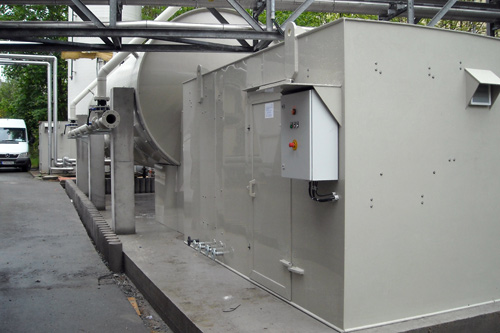
Interior view: biological gas desulphurization with downstream chemical scrubber for a paper factory (technical room).
Questions about this product? We are happy to advise you – personally and without obligation.
Contact us →